
Costly Assumptions Families Make When Planning Their First Big Trip
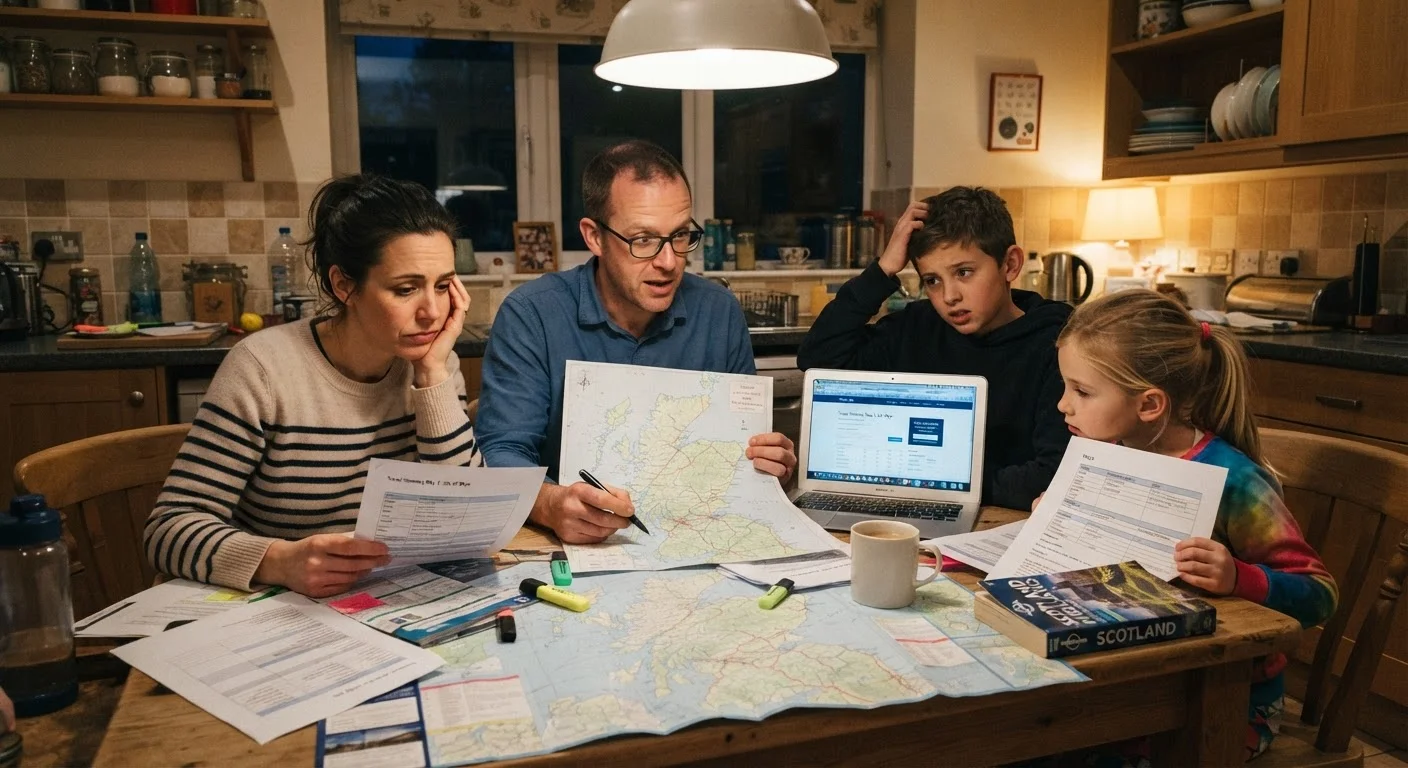
Photo credit: advancesimple.com
From underestimating food costs to overlooking travel insurance, these common planning gaps can quietly derail a family vacation budget.
Key Takeaways
- Food and activity costs are consistently underestimated, often doubling initial budget estimates.
- Travel insurance is frequently skipped until after a costly cancellation forces families to reconsider.
- Passport and documentation timelines catch many first-time international travelers off guard.
- Peak-season pricing can make a familiar destination feel unrecognizable on a budget.
- Transportation within a destination adds up fast and rarely appears in early planning spreadsheets.
Where first-time family travel budgets go wrong
Planning a first big family trip carries a specific kind of financial risk: the costs you do not see when you book are often larger than the ones you do. Flights and accommodation are concrete line items on a screen; ground transportation, food, and park entry fees are abstract until they appear on a credit card statement mid-trip.
The mistakes below are not about carelessness. They are about how travel costs are structured and presented, which makes certain assumptions feel reasonable until the receipts arrive. A family vacation planning checklist can help you work through logistics systematically before any money changes hands.
Budgeting only for flights and lodging while ignoring daily spending.
Why it happens: Flights and hotels are the most visible costs when booking, so families anchor to those numbers and treat everything else as minor. In practice, meals, transportation, attraction tickets, and incidentals for a family of four can match or exceed lodging costs.
Assuming peak-season travel is unavoidable because of school schedules.
Why it happens: Many families default to summer or spring break without checking whether those periods carry significantly higher prices for their chosen destination.
Treating 'all-inclusive' as synonymous with 'no surprises on the bill.'
Why it happens: The phrase implies simplicity, and families reasonably expect one price to cover the trip. Many all-inclusive packages exclude specific restaurants, activities, gratuities, airport transfers, and premium drinks.
Forgetting that each family member needs separate transportation and activity tickets.
Why it happens: Per-person pricing is easy to overlook when browsing destination websites, which often advertise adult rates. Families mentally multiply by two adults and forget that children's tickets, while sometimes reduced, still cost money.
Underestimating baggage fees when flying with children.
Why it happens: Families pack more than couples or solo travelers: car seats, strollers, extra clothing layers, and medical supplies add volume. Many families do not check airline policies for each leg of the trip and assume one airline's rules apply everywhere.
Building a budget that actually holds
Once you understand where common estimates fail, the fix is usually straightforward: add more categories, not more cushion. A 10% buffer does little when an entire spending category is missing from the plan.
Skipping travel insurance is a gamble
Many families treat travel insurance as an optional line item and cut it when budgets feel tight. A single trip cancellation, a medical incident abroad, or a lost bag can cost far more than the policy would have. Review policy terms carefully, as coverage varies widely across providers and plan types. For general guidance on what policies typically cover, consult official insurer documentation or a licensed insurance adviser.
Start with a per-day food estimate that accounts for every meal and snack for every family member. Restaurant meals in tourist areas routinely run $15 to $25 per person per meal, so four people eating three meals out can easily exceed $200 a day before a single attraction ticket is purchased. Families who plan for grocery runs and one sit-down meal per day typically spend far less without compromising the experience.
Transportation within a destination deserves its own budget line. Rental cars, rideshares, taxis, ferries, and local transit all carry costs that vary significantly by city. For a detailed look at where travel money actually goes by category, see what everything actually costs for a family trip.
Documentation delays can cancel a trip
Passport processing times vary significantly and can extend well beyond standard estimates during busy periods. For international travel, apply for passports and any required visas far earlier than you think necessary. Check official government sources for current processing windows before purchasing non-refundable tickets. Missing a departure because of a documentation delay is a loss that travel insurance typically does not cover.
Families who feel constrained by budget should also consider whether the destination itself is doing most of the work. Budget travel fundamentals for first-time family travelers explains how to match destination choice to financial reality rather than adjusting the budget after the fact.
4x
Multiplier families forget when pricing activities
Per-person attraction pricing means a $25 entry fee becomes $100 or more for a typical family of four, a math error that accumulates across a multi-day itinerary.
30-50%
Typical price difference between peak and shoulder season
Travel industry analyses have found that accommodation rates in many popular U.S. and international destinations drop substantially outside peak booking periods.

Author
Smart Family Travel Editorial Team
Smart Family Travel Editorial Team is the collective byline for our editorial team and contributor network. Articles published under this byline or an editorial pen name are researched, written, and reviewed according to our editorial standards for clarity, consistency, and independence before publication.
View all articles →