
Container Gardening in Small Spaces: What Works and What Does Not
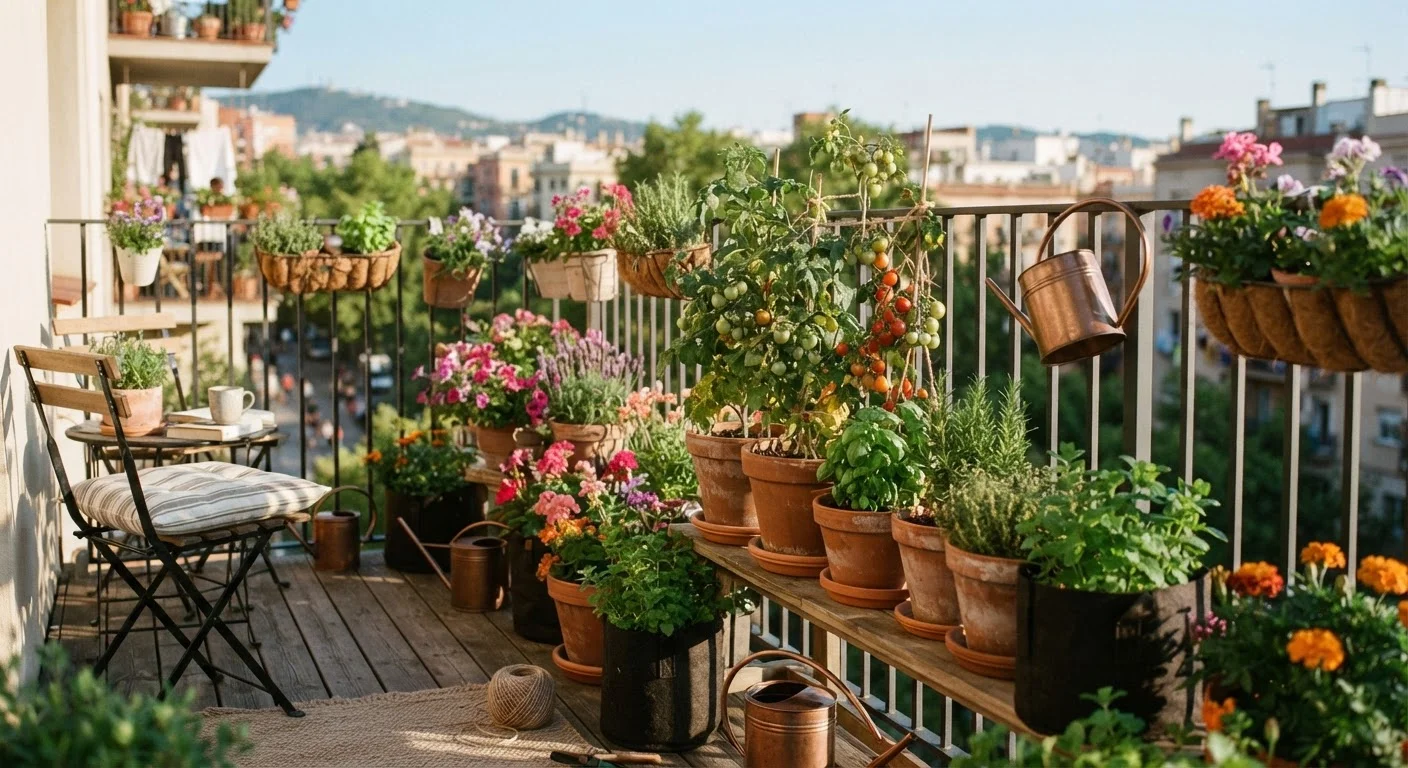
Photo credit: advancesimple.com
In this article
Pots and planters make gardening possible on patios and balconies, but they come with real tradeoffs. Get an honest look at both sides.
Key Takeaways
- Container gardening works well on patios and balconies where in-ground planting is not possible.
- Pots dry out faster than garden beds, so watering frequency is higher and more critical.
- Container soil costs money every season; good-quality potting mix is not optional.
- Vegetables like tomatoes and lettuce do well in containers; large root crops generally do not.
- Starting from seed cuts plant costs significantly compared to buying nursery starts.
Works where in-ground planting is impossible
Balconies, patios, and paved yards all become usable growing spaces with containers. Renters who cannot alter the property can still garden without restriction.
Portable and flexible
Pots can be moved to follow the sun, brought indoors before frost, or rearranged as needed. This flexibility is not possible with ground beds.
Easier to control soil quality
You fill containers with a mix you choose, which avoids the rocky, clay-heavy, or nutrient-poor native soil that plagues many yards.
Lower barrier for beginners
A few pots on a porch is a manageable starting point. The scale stays small enough to monitor closely without feeling overwhelming.
Reduces some pest and weed pressure
Containers sit off the ground and hold fresh potting mix, which limits ground-dwelling pests and cuts down on weeding compared to in-ground beds.
Dries out much faster than garden beds
Containers lose moisture quickly through evaporation from walls and drainage holes. In peak summer, daily watering is common and skipping even one day can stress plants.
Annual soil costs add up
Potting mix needs to be refreshed or replaced each season. Over several pots, this becomes a recurring expense that in-ground gardeners do not face.
Limited root space restricts plant choices
Deep-rooted crops and large plants simply do not perform well in standard containers. Gardeners with an interest in root vegetables or sprawling crops will find containers frustrating.
Nutrient depletion happens faster
Frequent watering flushes nutrients out of potting mix more quickly than from garden soil. Without regular feeding or soil amendment, container plants can yellow and stall mid-season.
Heat stress on roots in hot climates
Dark plastic pots in full sun can heat the soil to temperatures that damage roots. Light-colored pots or fabric bags help, but the problem is real in southern and southwestern climates.
What container gardening actually involves
Container gardening means growing plants in pots, planters, buckets, raised troughs, or any vessel that holds soil rather than planting directly in the ground. For families in apartments, townhomes, or homes with paved yards, it is often the only practical way to garden at all.
The appeal is straightforward: you control the soil, you can move plants to follow sunlight, and you can start small without committing to a full yard project. Containers also work well as a first step for anyone new to growing plants. See how to start a vegetable garden on almost no budget for a broader look at low-cost food gardening approaches that pair well with containers.
What works well in containers
Certain plants are genuinely well-suited to life in a pot. Herbs such as basil, parsley, chives, and mint grow reliably in containers and produce enough for regular kitchen use. Compact vegetables, including cherry tomatoes, bush beans, leaf lettuce, spinach, peppers, and radishes, perform well as long as the container is large enough and watering is consistent.
Flowers, including marigolds, petunias, and nasturtiums, also thrive in containers and can be used to fill in gaps between edibles. Strawberries do well in hanging baskets or tiered planters. If you are weighing which types of plants to invest in season after season, the perennials vs. annuals cost comparison covers the financial tradeoffs clearly.
Works where in-ground planting is impossible
Balconies, patios, and paved yards all become usable growing spaces with containers. Renters who cannot alter the property can still garden without restriction.
Portable and flexible
Pots can be moved to follow the sun, brought indoors before frost, or rearranged as needed. This flexibility is not possible with ground beds.
Easier to control soil quality
You fill containers with a mix you choose, which avoids the rocky, clay-heavy, or nutrient-poor native soil that plagues many yards.
Lower barrier for beginners
A few pots on a porch is a manageable starting point. The scale stays small enough to monitor closely without feeling overwhelming.
Reduces some pest and weed pressure
Containers sit off the ground and hold fresh potting mix, which limits ground-dwelling pests and cuts down on weeding compared to in-ground beds.
Soil quality matters more in containers than in the ground because roots cannot spread to find nutrients. Cheap potting mixes drain poorly or dry into a hard mass that repels water. Affordable soil amendments like compost can stretch a bag of potting mix further without spending much.
Where containers fall short
Container gardening has genuine limitations that are worth knowing before you invest in pots and soil.
Dries out much faster than garden beds
Containers lose moisture quickly through evaporation from walls and drainage holes. In peak summer, daily watering is common and skipping even one day can stress plants.
Annual soil costs add up
Potting mix needs to be refreshed or replaced each season. Over several pots, this becomes a recurring expense that in-ground gardeners do not face.
Limited root space restricts plant choices
Deep-rooted crops and large plants simply do not perform well in standard containers. Gardeners with an interest in root vegetables or sprawling crops will find containers frustrating.
Nutrient depletion happens faster
Frequent watering flushes nutrients out of potting mix more quickly than from garden soil. Without regular feeding or soil amendment, container plants can yellow and stall mid-season.
Heat stress on roots in hot climates
Dark plastic pots in full sun can heat the soil to temperatures that damage roots. Light-colored pots or fabric bags help, but the problem is real in southern and southwestern climates.
Watering is the most common point of failure. Containers, especially small or unglazed clay ones, dry out fast in summer heat. A plant that looks fine in the morning can be wilting by late afternoon on a hot patio. Inconsistent watering is one of the main reasons new container plants die early, and it is easy to underestimate how often pots need attention.
Large root vegetables, including carrots, parsnips, and most winter squash, do poorly in standard containers. They need more depth and volume than most pots provide. Corn and sprawling melons are not practical choices either.
Keeping container gardening affordable
The startup cost of containers, potting mix, and plants adds up faster than most beginners expect. There are real ways to reduce it.
Repurposing food-grade buckets, wooden crates, or colanders as planters cuts container costs to nearly nothing. Fabric grow bags are inexpensive and improve drainage and air circulation compared to solid plastic pots. Starting from seed rather than buying nursery transplants reduces plant costs significantly. Cuttings, divisions, and community plant swaps are other ways to grow your container collection without spending at the nursery.
Soil reuse and amendment
Used potting mix from last season is not worthless, but it needs help. Mix in finished compost and a small amount of fresh potting mix before reusing it. Check for signs of root rot or fungal growth first, and discard any mix that smells sour or has obvious mold. Refreshing soil this way is usually cheaper than buying new bags each year.
Soil costs are ongoing. Most potting mixes become compacted and nutrient-depleted after one season. Making compost at home and blending it into used potting mix each spring can extend the life of your soil and reduce how much you need to buy. For curb appeal on a budget, container plantings near an entry also fit well with low-cost landscaping strategies.

Author
Budget Garden & Yard Editorial Team
Budget Garden & Yard Editorial Team is the collective byline for our editorial team and contributor network. Articles published under this byline or an editorial pen name are researched, written, and reviewed according to our editorial standards for clarity, consistency, and independence before publication.
View all articles →