
Perennials vs. Annuals: Which Is the Smarter Long-Term Investment for Your Yard
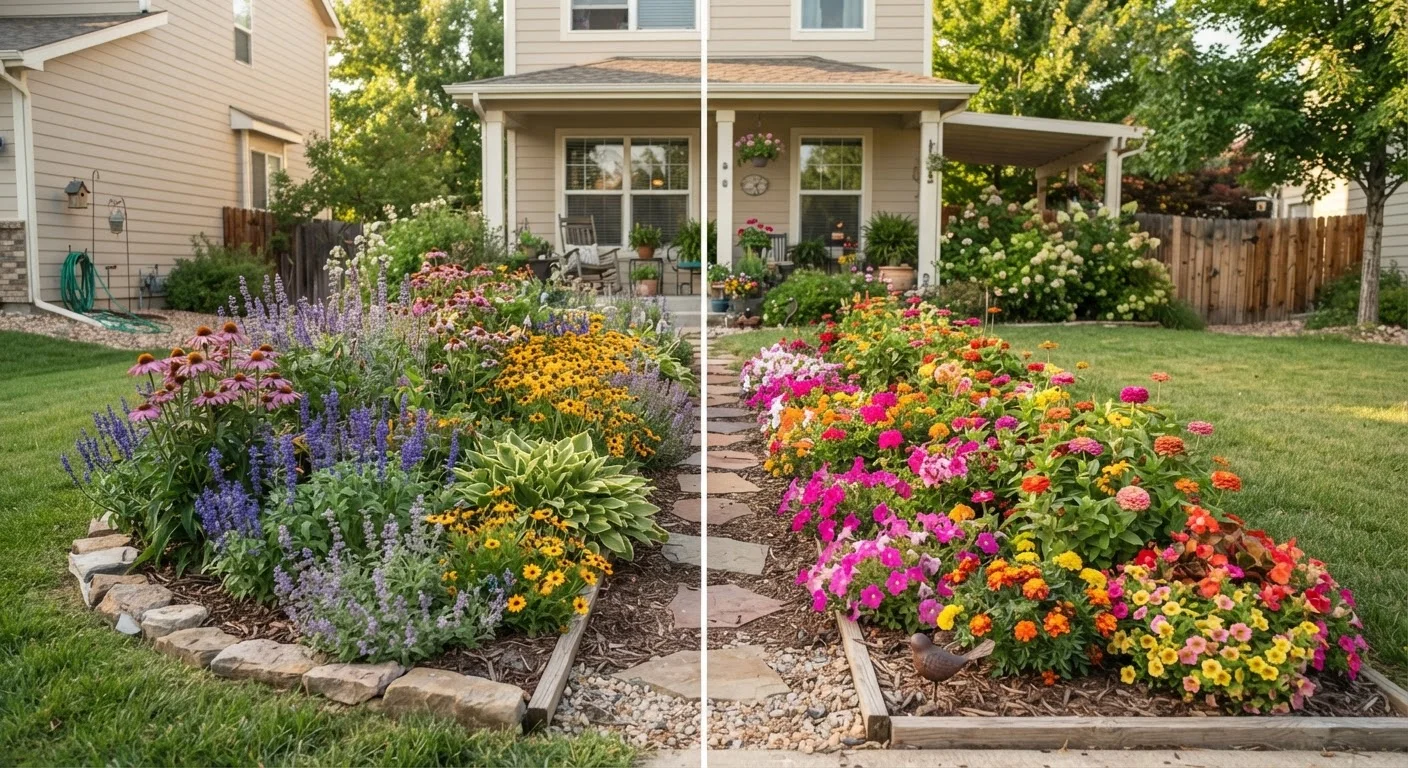
Photo credit: advancesimple.com
In this article
Annuals bloom boldly but perennials come back every year. Weigh the costs, effort, and payoff of each before you plant.
Key Takeaways
- Perennials cost more upfront but return each year, reducing long-term spending.
- Annuals deliver continuous color all season but require repurchasing every year.
- Mixing both types gives a yard consistent structure plus seasonal variety.
- Your climate, soil, and available time matter as much as price when choosing.
- Dividing perennials over time can multiply your plants for free.
What the two types actually are
Annual flowers complete their entire life cycle in one growing season. You plant them in spring, they bloom through summer or fall, and they die when frost arrives. Perennials, by contrast, go dormant in winter and regrow from their root system the following spring. A single perennial plant can return for many years with proper care.
This basic difference shapes everything else: cost, effort, color reliability, and how your yard looks in year three versus year one. Neither type is inherently better. The smarter choice depends on what you want your yard to do and what you can realistically spend and manage each season.
For a broader look at how seasonal decisions affect your property costs, see our guide to seasonal home maintenance.
The real cost comparison
Annuals tend to cost less per plant at the garden center, often running $2 to $5 for a small pot. But you buy them every single year. A family spending $60 on annuals each spring spends $300 over five years for the same visual result.
Perennials typically cost $6 to $15 per plant, sometimes more for larger specimens. That stings in year one. In year two, though, those same plants come back without any additional purchase. Many perennials also spread or can be divided every few years, producing free new plants that fill in gaps or move to other spots in the yard.
Run the math over a five-year window and perennials are usually cheaper per season of color, particularly if you divide them. The break-even point for most perennials falls around year two or three.
| Perennials | Annuals | |
|---|---|---|
| Upfront cost per plant | Higher ($6-$15+) | Lower ($2-$5) |
| Recurring annual cost | None after establishment | Full repurchase every year |
| Bloom duration per season | Weeks (variety-specific) | All season until frost |
| Maintenance effort | Lower after year one | Regular deadheading needed |
| Propagation potential | Dividable for free plants | No propagation benefit |
| Flexibility to change | Lower, long-term commitment | High, replant each year |
| Best time horizon | 3+ years | 1 season at a time |
If you are also weighing whether to start from seed rather than buying transplants, the seed packets vs. starter plants comparison covers that cost breakdown in detail.
Time and effort differences
Annuals demand consistent deadheading (removing spent flowers) to keep blooming, and you spend time each spring selecting, purchasing, and replanting from scratch. For busy families, that annual replanting ritual adds up, especially if you have large beds.
Perennials require less seasonal labor once established. The main tasks are dividing clumps every few years, cutting back dead foliage in fall or early spring, and occasional fertilizing. The first year often needs more watering while roots establish, but after that, many perennials tolerate drought reasonably well.
One honest tradeoff: most perennials bloom for a few weeks rather than all season. A coneflower or black-eyed Susan has a defined window. Annuals like marigolds or zinnias bloom continuously until frost, which is a real advantage if constant color is the goal.
Get more plants for free
Many perennials, including hostas, daylilies, and ornamental grasses, can be divided every two to four years. You simply dig up the clump, separate the root mass into sections, and replant each section. Neighbors and local gardening groups often swap divisions at no cost, which is one of the most practical ways to build a full garden bed without spending much.
What works better in different situations
New homeowners or renters who are not sure how long they will stay in a home often do better with annuals. There is no long-term investment to abandon if plans change. Annuals are also useful in spots where you are still figuring out a bed layout. They fill space while you decide what permanent plants belong there.
Perennials make more sense for families planting a yard they plan to maintain for years. They build structure over time and create a recognizable garden that improves each season. A yard anchored by perennials also tends to look more polished with less effort in years two through five.
For small-space gardeners growing in containers, annuals often win because pots dry out faster and the volume of soil limits root growth, making perennial establishment harder. See our container gardening guide for specifics on that tradeoff.
Climate matters too. In USDA hardiness zones with harsh winters, some plants labeled as perennials at the garden center may only survive as annuals in your area. Always check the zone rating before assuming a plant will return.
Blending both types without overspending
Most experienced gardeners use both. A practical approach for budget-conscious families is to spend the majority of the planting budget on perennials in year one and fill gaps with a smaller quantity of annuals. As the perennials fill in over subsequent seasons, the need for annuals shrinks.
Dividing perennials is one of the most reliable ways to stretch a garden budget. Many varieties can be split with a shovel every two to four years. One $10 plant can become three or four plants, which can then be divided again. Over time, you can fill large areas of your yard for very little money beyond the initial purchase.
For more ways to get a good-looking yard without large expenditures, our low-cost curb appeal strategies article covers practical approaches that go beyond flower choice.

Author
Budget Garden & Yard Editorial Team
Budget Garden & Yard Editorial Team is the collective byline for our editorial team and contributor network. Articles published under this byline or an editorial pen name are researched, written, and reviewed according to our editorial standards for clarity, consistency, and independence before publication.
View all articles →