
Building a Weekly Meal Plan Around a Modest Grocery Budget
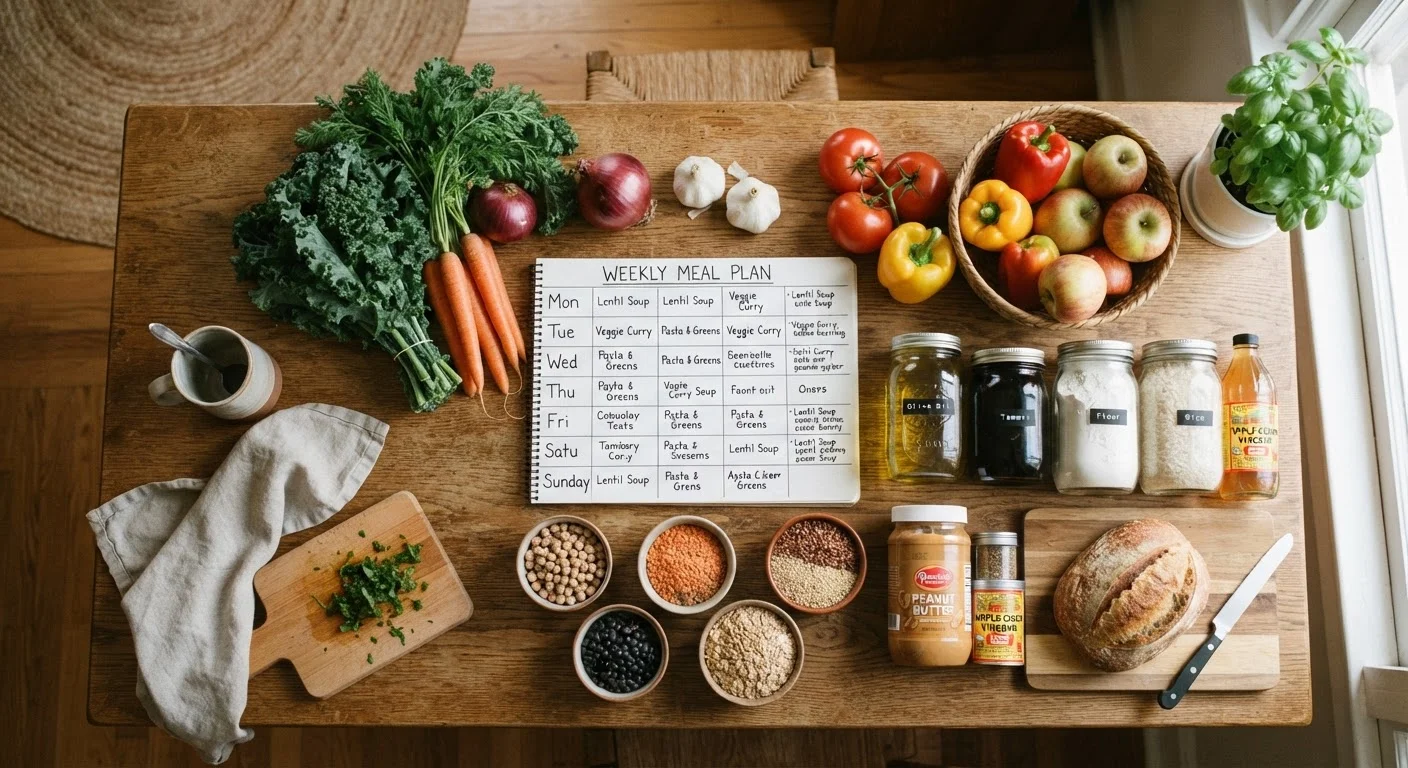
Photo credit: advancesimple.com
A practical walkthrough for structuring healthy, balanced weekly meals when money is a real constraint.
Key Takeaways
- Anchoring meals around low-cost proteins and whole grains keeps weekly spending predictable.
- Planning before you shop reduces impulse purchases and food waste simultaneously.
- A flexible template repeated each week saves planning time without creating menu fatigue.
- Batch cooking two or three ingredients covers multiple meals without extra daily effort.
- Frozen and canned vegetables are nutritionally comparable to fresh and cost less per serving.
Why structure matters when money is tight
A grocery budget without a meal plan is easy to undermine. Without knowing what meals you need to cook, it is hard to judge whether a purchase is necessary, and small additions at the register accumulate fast. Structure is not about rigid recipes; it is about giving every dollar a job before you get to the store.
Research on household food spending consistently finds that families who plan meals before shopping spend less per week and waste less food. Meal planning vs. grocery shopping without a plan examines those trade-offs in detail. The short version is that the time investment in planning, typically 20 to 30 minutes, pays back in reduced spending and fewer wasted ingredients.
The goal here is a repeatable weekly template, not a perfect plan. Once you have the structure, you adjust ingredients week to week based on what is affordable and available, while keeping the overall shape of the plan consistent.
Notebook or printed meal plan template
Records the week's meals and generates the corresponding shopping list.
Calculator or budgeting app
Tracks estimated per-item costs against the weekly spending target.
Reusable grocery list app or index cards
Organizes the shopping list by store section to reduce browsing time and impulse spending.
Airtight storage containers
Keeps batch-cooked grains, beans, and proteins fresh for use across multiple meals.
How to build the plan, step by step
What you will need
Set your per-meal cost target
Divide your total weekly grocery budget by the number of meals your household needs to cover. If you have a family of four with $120 for the week and need to cover 18 main meals plus breakfasts, you have roughly $4 to $5 per meal. Writing this number down before you plan anything else gives every decision a concrete anchor.
Keep in mind that budget groceries often include staples used across multiple meals, such as a bag of rice or a bottle of olive oil. Those costs should be spread across the meals they serve, not charged to a single dinner.
Choose two or three protein anchors for the week
Protein is usually the most expensive line on a grocery receipt. Choosing a small number of low-cost options and building meals around them is one of the most effective ways to control spending. Dried or canned legumes, eggs, canned fish, and whole chicken pieces are consistently among the lower-cost protein sources available in most US grocery stores.
Plan to use each protein in at least two different meals. A whole chicken roasted on Sunday can become tacos on Monday and soup on Tuesday. Cooked lentils can anchor a grain bowl one night and a pasta sauce another. This approach is covered in more depth in what nutrition science says about eating well on a budget.
Build a grain or starch base
Whole grains and starchy vegetables fill plates, support satiety, and cost little per serving. Brown rice, rolled oats, whole wheat pasta, potatoes, and dried lentils are shelf-stable, widely available, and versatile across breakfast, lunch, and dinner.
Buying these in larger quantities generally lowers the per-serving cost. If your storage allows it, a 5-pound bag of oats or a 10-pound bag of rice can cover multiple weeks of breakfasts and side dishes. For a reference on which pantry staples deliver the most flexibility per dollar, see pantry staples that support healthy eating without constant restocking.
Map out produce by what is in season or on sale
Fresh produce prices change week to week based on season and supply. Before writing your meal plan, check what is currently low-cost at your store: this is usually what is in season locally. Build vegetable-heavy sides and one-pot dishes around those items rather than starting with a recipe and hunting for its exact ingredients.
Frozen vegetables are a practical alternative when fresh prices are high. Research consistently supports that frozen vegetables retain most of their vitamins and minerals because they are processed close to harvest. A bag of frozen spinach, peas, or mixed vegetables added to a grain dish or egg scramble extends the meal's nutritional profile without much added cost.
Assign meals to days and write the shopping list
With proteins, grains, and produce chosen, assign them to specific days. Group similar ingredients so that the same item serves multiple meals: for example, a bunch of kale used in a stir-fry on Wednesday can also appear in a bean soup on Thursday. This overlap is how food waste gets reduced.
Write the shopping list organized by store section (produce, dairy, dry goods, frozen) rather than by meal. This saves time in the store and makes it easier to spot where substitutions are possible if something is out of stock or priced higher than expected. Common shopping patterns that inflate costs unintentionally are described in grocery shopping habits that quietly undermine a healthy budget.
Cook in batches to reduce daily effort
Set aside one or two sessions per week to cook ingredients in bulk rather than cooking each meal entirely from scratch. Cook a full pot of grains, roast a tray of vegetables, and prepare a large portion of protein. Stored in labeled containers, these components can be pulled together into different meals each day with minimal additional work.
Batch cooking also reduces the temptation to order takeout on busy evenings, which is one of the most common points at which a grocery budget gets derailed. For a broader look at the financial comparison between planned and unplanned grocery shopping, see meal planning vs. grocery shopping without a plan.
For a deeper look at how grocery budget principles hold across different stores and seasons, grocery spending principles that hold regardless of store or season covers the habits that consistently reduce costs without sacrificing nutrition. If you want guidance on adjusting costs without cutting nutritional quality, making a grocery budget work without cutting nutrition walks through specific strategies.
This article provides general nutrition and budgeting information for educational purposes only. It is not a substitute for advice from a registered dietitian, nutritionist, or financial professional. Nutritional needs vary by individual; consult a qualified healthcare provider before making significant changes to your diet, especially if you have a chronic health condition or are planning for a child, pregnant person, or older adult.

Author
Affordable Healthy Living Editorial Team
Affordable Healthy Living Editorial Team is the collective byline for our editorial team and contributor network. Articles published under this byline or an editorial pen name are researched, written, and reviewed according to our editorial standards for clarity, consistency, and independence before publication.
View all articles →