
Making a Grocery Budget Work Without Cutting Nutrition
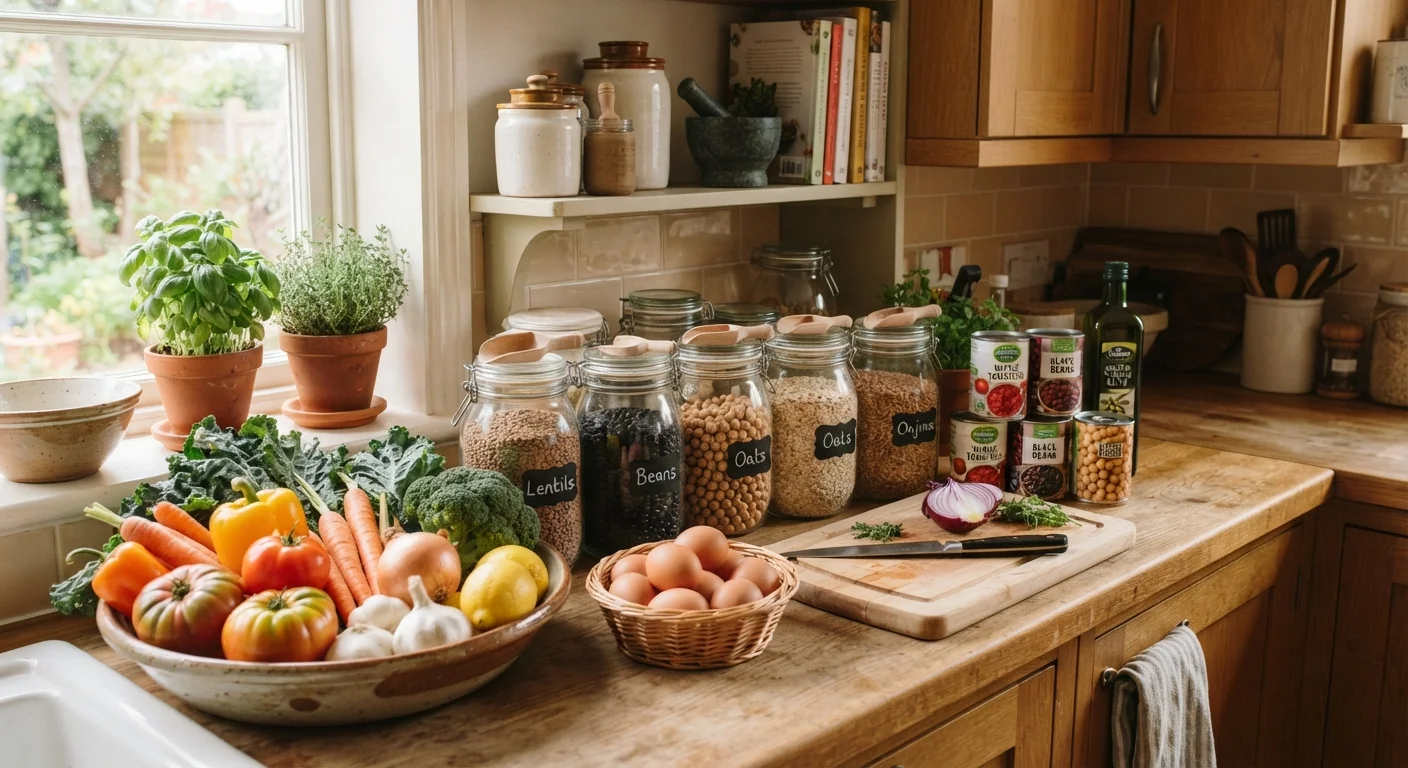
Photo credit: advancesimple.com
In this article
Learn how to reduce food costs through planning, storage, and smarter shopping without compromising the nutritional quality of family meals.
Key Takeaways
- Meal planning before shopping consistently reduces impulse purchases and food waste.
- Nutrient-dense staples like dried beans, eggs, and frozen vegetables cost far less per serving than processed alternatives.
- Buying in bulk and storing food correctly extends shelf life and reduces repeat spending.
- Cooking in batches lowers per-meal cost and cuts the temptation to order takeout on busy nights.
- Frozen produce retains most of its nutrients and can cost significantly less than fresh out-of-season options.
Why nutrition and budget goals don't have to compete
Many families assume that eating well costs more. In practice, the most nutritious foods available, whole grains, legumes, eggs, frozen vegetables, and seasonal produce, are often the most affordable items in the store. The spending problem usually comes from convenience packaging, processed snacks, and unplanned shopping trips, not from choosing foods that are genuinely good for the body.
For a broader look at how small food habits connect to overall household savings, see low-cost family routines that add up over time. The grocery aisle is one of the fastest places to see those habits pay off.
This guide walks through a practical sequence: plan first, shop second, store well, and cook efficiently. Each step builds on the last, and none of them require couponing, extreme restriction, or hours of extra work.
What you will need
What you need before you start
Before working through the steps below, gather a few basics. The process works with whatever storage and equipment your kitchen already has.
Notepad or meal planning app
Used to write out the week's meals and the corresponding shopping list before entering the store.
Freezer-safe containers or bags
Needed for batch cooking and storing bulk purchases to extend shelf life.
Kitchen scale
Helps portion bulk items accurately, reducing overuse and stretching ingredients further.
Slow cooker or large stockpot
Makes batch cooking dried beans and soups practical without much active time.
Step-by-step: making your grocery budget work
Follow these steps in order. The first two, planning and taking inventory, take the most time upfront but reduce wasted spending throughout the week.
Take a full inventory of what you already have
Before writing any list, check every shelf, drawer, and freezer compartment in your kitchen. Note what is there, including quantities and expiration dates. Most households have forgotten cans, partial bags of grains, or frozen protein that can anchor at least two or three meals.
This step alone can trim your next shopping trip by 20 to 30 percent simply by using what you already paid for.
Plan meals for the week before writing your list
Using your inventory as a starting point, sketch out 5 to 7 dinners and decide how lunches will work (leftovers, simple assemblies, or both). Write your shopping list only after the plan is set. Every item on the list should connect to a specific meal.
Meal planning versus unplanned shopping consistently shows that planning before shopping reduces both total spend and food thrown away.
Build your list around nutrient-dense, low-cost staples
Structure the list so that proteins and produce make up the bulk of the cart. Prioritize dried or canned legumes, eggs, frozen vegetables, and whole grains. Limit items that are heavily processed or pre-portioned, since those carry the highest markup relative to their nutritional content.
See what nutrition science says about eating well on a tight budget for evidence-based guidance on which food categories deliver the most value.
Store purchases correctly to protect what you spent
Improper storage is where grocery money quietly disappears. Refrigerate fresh produce in the right conditions (most vegetables do better in the crisper drawer; most fruit does better at room temperature until ripe). Transfer bulk dry goods into airtight containers to prevent staleness and pests. Portion and freeze any meat you won't use within two days of purchase.
Cook in batches to lower per-meal cost and effort
Cooking a large pot of beans, a tray of roasted vegetables, or a batch of grain takes roughly the same energy and time as cooking a single portion. Having components ready in the refrigerator makes it easy to assemble quick meals on weeknights without reaching for expensive convenience food.
For a broader view of how consistent grocery habits reduce spending regardless of where or when you shop, that article covers the principles that hold across seasons and store types.
Review and adjust after each week
At the end of each week, note what got eaten, what got wasted, and where the budget landed. A five-minute check-in is enough. Over three to four weeks, patterns become clear: which meals the household actually likes, which ingredients go unused, and where the plan needs to shift.
This review loop is what separates a budget that holds month to month from one that gets abandoned. For help building the broader financial framework around grocery spending, a household budget framework that holds up month to month is a useful companion resource.
For more on structuring a full weekly plan around a fixed dollar amount, building a weekly meal plan on a modest budget walks through the process in detail.
Choosing foods that do the most nutritional work per dollar
Not all affordable foods are equal. Some inexpensive staples carry a high nutrient load per serving; others are cheap because they are mostly filler. The foods worth anchoring a budget around include dried or canned legumes (lentils, chickpeas, black beans), eggs, oats, brown rice, frozen spinach, frozen broccoli, canned tomatoes, and seasonal root vegetables. These cover protein, fiber, vitamins, and complex carbohydrates at a low per-serving cost.
Frozen vegetables are worth special attention. Frozen versus fresh produce is a common debate, and the evidence generally shows frozen retains most nutrients because it is processed quickly after harvest. Buying frozen also removes seasonality as a price factor.
For a fuller reference list of shelf-stable foods that stretch across many meals, pantry staples that support healthy eating covers what to keep on hand and why.
Cost per serving matters more than cost per item
A $4 bag of dried lentils yields roughly 10 to 12 servings, which works out to well under 50 cents per serving. Compare that to a $3 can of soup with two servings. Thinking in per-serving terms rather than sticker price changes which items look like good value. This mental shift is one of the most practical tools in budget grocery shopping.
If you want to grow some of your own produce to reduce costs further, starting a vegetable garden on almost no budget is a practical starting point even for renters or beginners with limited space.

Author
Frugal Living Editorial Team
Frugal Living Editorial Team is the collective byline for our editorial team and contributor network. Articles published under this byline or an editorial pen name are researched, written, and reviewed according to our editorial standards for clarity, consistency, and independence before publication.
View all articles →