
Pantry Staples That Support Healthy Eating Without Constant Restocking
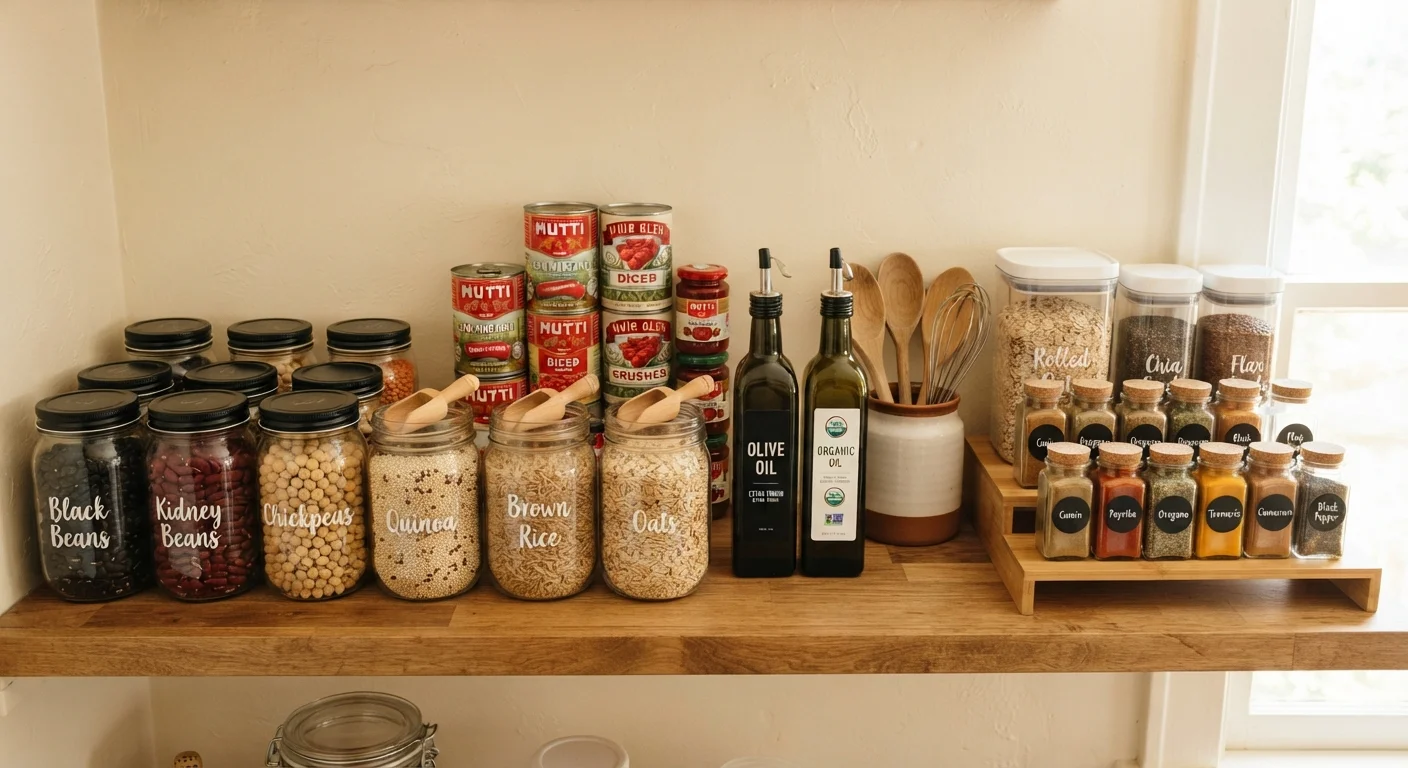
Photo credit: advancesimple.com
In this article
A reference list of shelf-stable, nutrient-dense foods that stretch across many meals and keep costs predictable.
Why shelf-stable staples matter for household nutrition
Stocking a pantry with the right items is one of the most reliable ways to keep meals nutritious without spending heavily each week. When the foundation is already in place, cooking decisions become faster, food waste drops, and the budget stays more predictable. This reference covers the shelf-stable foods that appear most often in practical, nutrition-conscious meal plans for American families.
For a broader look at how nutrition science informs budget food choices, see what research says about affordable nutrition.
Core pantry categories and what to keep on hand
Whole grains and dried starches
Brown rice, rolled oats, whole-wheat pasta, and dried lentils store for a year or more in sealed containers. These foods supply fiber, B vitamins, and steady energy. Oats in particular are flexible: they work as breakfast, as a binder in savory dishes, and as a thickener in soups.
Legumes
Dried beans (black, pinto, kidney, chickpeas) and split peas cost less per serving than nearly any other protein source. Canned versions are almost as good nutritionally and take no soak time. Rinsing canned beans before use reduces sodium content significantly. Nutrition research supports legumes as one of the strongest combinations of protein, fiber, and micronutrients at low cost.
Canned tomatoes and vegetables
Whole, crushed, and diced canned tomatoes are the base for soups, stews, pasta sauces, and braises. Canned pumpkin, corn, and green beans extend vegetable variety when fresh options are out of season or overpriced. See how canned and frozen produce compares nutritionally to fresh for a fuller picture.
Cooking fats and oils
A neutral oil and a small bottle of olive oil cover most cooking needs. These also stretch calories in a useful way during low-budget periods. Store oils away from heat and light to prevent rancidity.
Nuts, seeds, and nut butters
Unsalted peanut butter, sunflower seeds, and walnuts supply healthy fats and protein. They also add staying power to simple meals. Buying larger containers lowers the per-ounce cost substantially.
Spices and flavor bases
Garlic powder, cumin, chili powder, smoked paprika, dried oregano, and black pepper transform plain grains and beans into genuinely satisfying meals. A well-stocked spice shelf means families can rotate global flavor profiles without buying new ingredients every week.
Rotating your stock without waste
The most common pantry problem is buying duplicates of items already on hand, or letting staples expire before they are used. A simple habit: move older packages to the front when new ones arrive. This is sometimes called FIFO (first in, first out) stock rotation.
A structured weekly meal plan is the fastest way to turn pantry inventory into actual meals rather than clutter. Planning three to four dinners around pantry staples each week reduces how often families need to shop for fresh items, which lowers impulse spending.
For spending patterns that work against a healthy pantry budget, common grocery habits that undermine budgets covers the specific behaviors worth changing.
Shelf-stable food
Food that can be stored safely at room temperature for an extended period without spoiling. Examples include dried grains, canned goods, and dried legumes.
FIFO (first in, first out)
A stock rotation method where older inventory is used before newer purchases. In a home pantry, this means moving older packages to the front when new ones are added.
Legume
A plant family that includes beans, lentils, peas, and chickpeas. Legumes are high in protein, fiber, and various minerals, and are among the most affordable nutrient-dense foods available.
Nutrient density
A measure of how much nutrition (vitamins, minerals, protein, fiber) a food provides relative to its calorie content. Foods high in nutrient density deliver more health value per dollar and per calorie.
Rancidity
The breakdown of fats and oils through oxidation or exposure to heat and light, producing off-flavors and potentially reducing nutritional quality. Proper storage slows this process.
Whole grain
A grain that retains its bran, germ, and endosperm layers. Whole grains supply more fiber, vitamins, and minerals than refined grains that have had these layers removed.
This article is for general informational purposes only and does not constitute medical, nutritional, or financial advice. Consult a qualified healthcare professional or registered dietitian for guidance specific to your health needs.

Author
Affordable Healthy Living Editorial Team
Affordable Healthy Living Editorial Team is the collective byline for our editorial team and contributor network. Articles published under this byline or an editorial pen name are researched, written, and reviewed according to our editorial standards for clarity, consistency, and independence before publication.
View all articles →