
Free and Low-Cost Ways to Get More Plants Without Buying New Ones
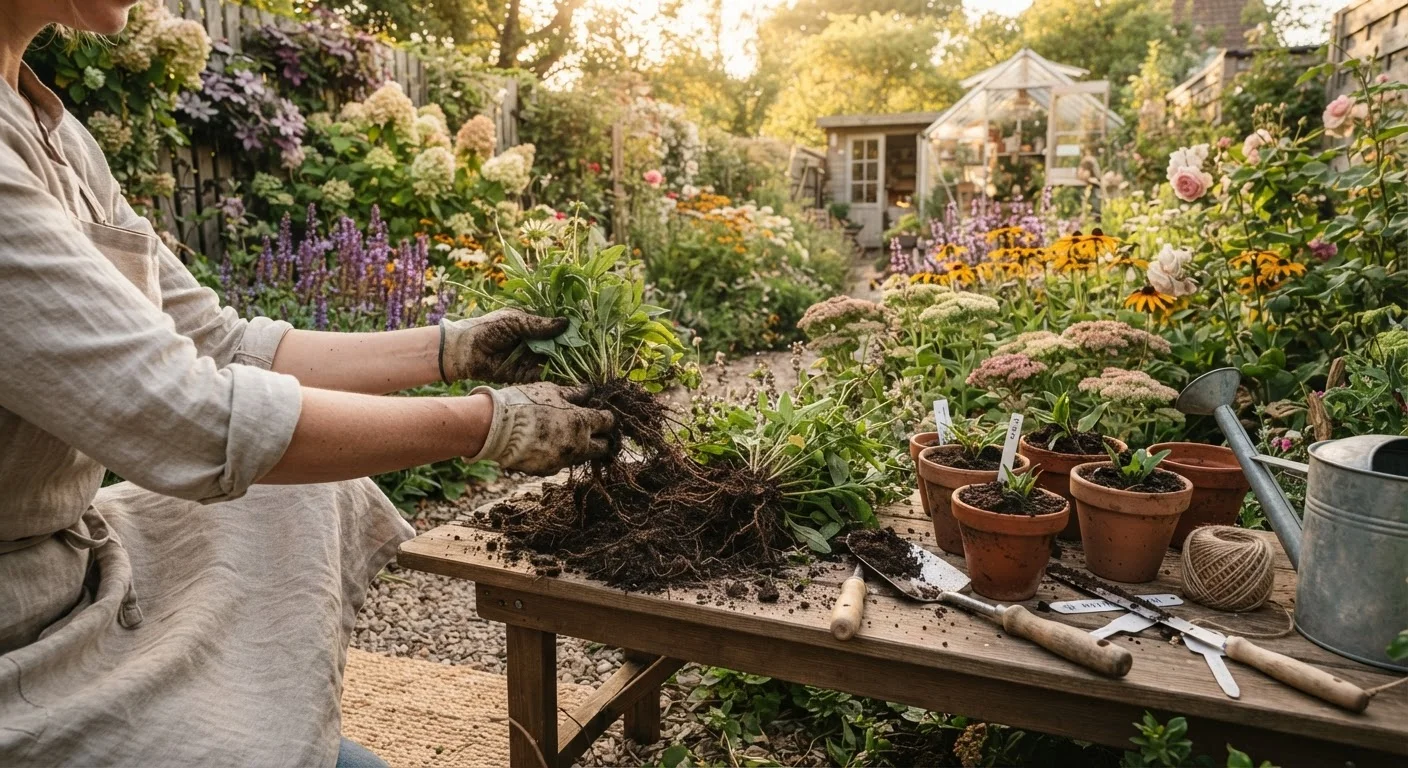
Photo credit: advancesimple.com
In this article
Division, cuttings, seed saving, and community plant swaps are all ways to expand your garden without spending at the nursery.
Key Takeaways
- Dividing mature perennials gives you multiple plants for free and often improves the health of the original.
- Stem and leaf cuttings work for many common houseplants and garden shrubs with minimal supplies.
- Saving seeds from vegetables and flowers can cut your planting costs season after season.
- Community plant swaps and neighborhood groups are reliable sources of free, locally adapted plants.
- Simple layering lets you root new shrubs or vines while they are still attached to the parent plant.
Why buying isn't the only way to grow
A trip to the nursery adds up fast. A single perennial can run $8 to $15, and filling a new bed or replacing winter losses can strain even a flexible budget. The good news is that plants reproduce, and most gardeners with established beds are sitting on more plant material than they realize.
The methods below work for beginners and don't require special equipment. Some cost nothing at all. If you're weighing other ways to stretch your garden budget, comparing seed packets to starter plants is a useful starting point for understanding where your money goes.
Divide mature perennials
Many perennials, including hostas, daylilies, coneflowers, and ornamental grasses, grow in clumps that expand each year. After two to four seasons, those clumps can be dug up and split into several smaller plants using a spade or garden fork. Each division can be replanted immediately or given away.
Division also benefits the original plant. Overcrowded clumps often bloom less. Splitting them refreshes the root system and typically improves flowering the following season. Spring and early fall are generally the best times to divide, when temperatures are mild and plants are not under heat stress.
Splitting an overcrowded clump gives you several plants and often improves the original's performance.
Take stem cuttings
Stem cuttings are one of the most reliable propagation methods for houseplants, herbs, and many garden shrubs. Cut a healthy stem just below a leaf node, remove the lower leaves, and place the cut end in water or moist potting mix. Many plants root within two to four weeks.
Pothos, coleus, impatiens, rosemary, and lavender are among the plants that root readily from cuttings. For woody shrubs, softwood cuttings taken in late spring through early summer tend to root more reliably than cuttings taken from older, tougher growth. A small amount of rooting hormone powder, available at most garden centers for a few dollars, can improve success rates but is not required for soft-stemmed plants.
Pothos, coleus, rosemary, and lavender all root from cuttings with little more than water and patience.
Save seeds from your existing plants
Letting some of your vegetables and flowers go to seed at the end of the season means free planting material for next year. Tomatoes, peppers, beans, zinnias, marigolds, and sunflowers are among the easiest plants to save seed from. Allow the seed heads or fruit to fully ripen on the plant, then harvest, dry, and store seeds in a cool, dry location in labeled paper envelopes or small jars.
One important caveat: seeds saved from hybrid varieties (often labeled F1 on seed packets) may not grow true to the parent plant. Open-pollinated and heirloom varieties produce seeds that reliably reproduce the original. Starting a vegetable garden on a tight budget covers how to choose varieties that make this approach practical from the start.
Open-pollinated and heirloom varieties produce seeds that reliably match the parent plant.
Try layering for shrubs and vines
Layering is a low-effort method for propagating shrubs, climbing roses, forsythia, and vines like honeysuckle. Bend a low, flexible stem to the ground, wound it lightly where it contacts the soil (scrape a small section of bark), and bury that section a few inches deep while leaving the growing tip above ground. Secure it with a U-shaped pin or a small rock.
Over several weeks to a few months, roots form at the buried section. Once the new plant has established roots, cut it free from the parent and transplant it. This method works without removing anything from the parent plant until the new one is ready, which makes failure almost risk-free.
Layering lets roots form before you separate the new plant, making it one of the most forgiving propagation methods.
Join a community plant swap
Plant swaps happen in person through local garden clubs, community centers, and parks departments, as well as online through neighborhood apps and social media groups. Participants bring divisions, cuttings, or potted extras and trade with others. You walk away with plants that are already proven to grow in your local climate and soil conditions.
If no organized swap exists in your area, an informal post in a neighborhood group asking whether anyone has divisions to share often produces results. Many gardeners have more plants than space and are happy to find them a new home. This approach also connects you to experienced local growers who can offer advice specific to your region.
Plants from local swaps are already adapted to your climate, which gives them a better start than nursery stock.
Putting it all together
None of these methods demands perfection on the first try. A cutting that doesn't root costs you nothing. A seed that fails to germinate taught you something about your conditions. Start with one technique that fits what you already have growing, and build from there.
Once you have more plants, the next question is where to put them. Container gardening is worth considering if you're short on ground space, and pairing new plants with low-cost soil amendments can help them establish without expensive inputs. For broader ideas on improving your yard without large spending, low-cost curb appeal strategies covers practical approaches worth reading alongside this one.
Label everything from the start
When you take cuttings or make divisions, write the plant name and date on a popsicle stick or piece of tape before you do anything else. It takes seconds, and it saves real confusion three weeks later when you have six unlabeled pots of rooting cuttings. A simple notebook or phone photo works just as well for tracking what you started and when.

Author
Budget Garden & Yard Editorial Team
Budget Garden & Yard Editorial Team is the collective byline for our editorial team and contributor network. Articles published under this byline or an editorial pen name are researched, written, and reviewed according to our editorial standards for clarity, consistency, and independence before publication.
View all articles →