
Landscaping on a Shoestring: Low-Cost Curb Appeal Strategies
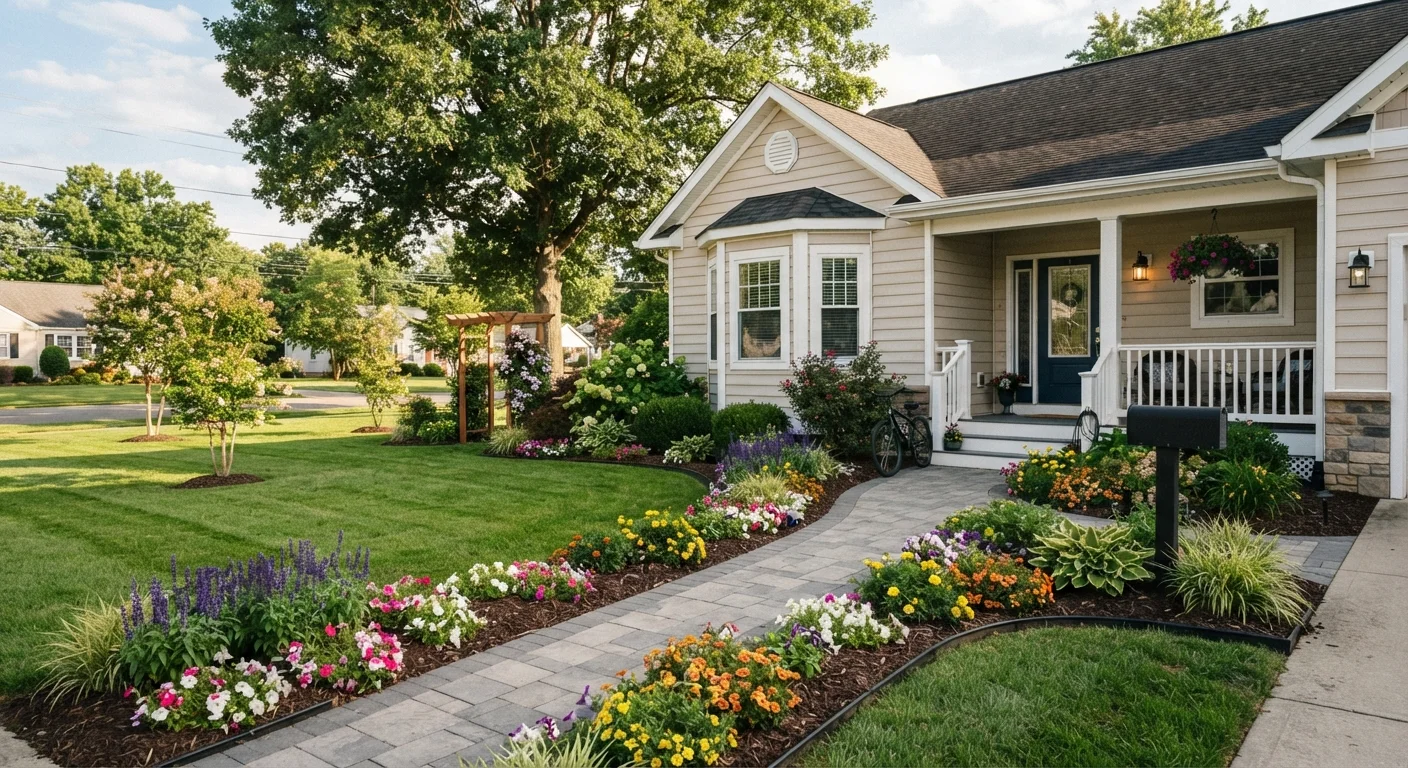
Photo credit: advancesimple.com
Practical, affordable landscaping ideas that improve outdoor appearance without requiring professional services or expensive materials.
Key Takeaways
- Edging, mulching, and weeding cost almost nothing but visibly improve curb appeal.
- Propagating plants from divisions or cuttings eliminates most nursery spending.
- Choosing native or drought-tolerant plants reduces both upfront cost and ongoing maintenance.
- Consistent small-scale maintenance outperforms occasional expensive overhauls.
- Free organic materials like compost and wood chips can replace costly landscape supplies.
Why low-cost landscaping works
Curb appeal improvements do not require a landscaping crew or a large materials budget. Most of the visual impact in a front yard comes from tidiness, defined structure, and healthy plant color, all of which are within reach using time, basic tools, and materials that are often free. The strategies below are ordered roughly from lowest cost to slightly higher cost, but all stay well within a shoestring budget.
One caution worth noting: some popular "money-saving" shortcuts in home improvement can backfire. Common budget renovation myths is worth reading before committing to any approach that sounds too simple.
Permits and HOA rules vary
Some municipalities and homeowners associations have rules about specific plants, mulch types, hardscaping materials, or front-yard modifications. Before making structural changes such as installing edging borders, raised beds, or gravel areas, check local codes and any HOA guidelines that apply to your property. This is general information and does not substitute for reviewing the specific regulations in your area.
Edge and define your beds before spending a dollar
A clean edge between lawn and garden bed does more for the appearance of a yard than nearly any plant addition. Use a flat spade or a manual edging tool to cut a crisp line along driveways, walkways, and garden borders. Recut edges two or three times a season to keep them sharp.
Defined beds also make the yard look intentional rather than overgrown. That perception matters when neighbors, guests, or potential buyers form their first impression. No materials are required beyond a tool you likely already own.
A clean edge between lawn and garden bed does more for curb appeal than nearly any plant addition.
Mulch beds with free or low-cost organic material
A 2- to 3-inch layer of mulch suppresses weeds, retains soil moisture, and gives garden beds a finished look. Many municipalities offer free wood chip mulch from tree-trimming operations. Check your city or county public works department website, or search the ChipDrop program, which connects homeowners with arborists who need to offload chips.
Shredded leaves collected in fall are another cost-free option. They decompose over the season and improve soil structure. For more on using organic materials effectively, see how cheap soil amendments compare to pricier fertilizers.
Free wood chip mulch from municipal programs can cover entire garden beds at no cost.
Expand plantings through division and cuttings
Buying flats of annuals or perennials every season adds up fast. Dividing existing clumping perennials such as hostas, daylilies, and ornamental grasses is free, and it keeps mature plants healthy by preventing overcrowding. Spring and early fall are the best windows for most divisions.
Stem cuttings from shrubs like forsythia, butterfly bush, and boxwood root readily in a cup of water or in moist potting mix. Neighborhood plant swaps and local garden club giveaways are also worth checking. The article free and low-cost ways to get more plants without buying new ones covers the full range of options in detail.
Dividing perennials costs nothing and multiplies your plantings while improving plant health.
Plant natives and drought-tolerant species to cut long-term costs
Native plants are adapted to local soils and rainfall, so they generally need less water, fertilizer, and pest control than non-native ornamentals. That translates to real savings over several seasons. Contact your state's cooperative extension service for a list of natives suited to your region and sun exposure.
Drought-tolerant plants, including many ornamental grasses, sedums, and lavender varieties, also reduce irrigation costs in drier climates. Choosing perennials over annuals when possible means the plant cost is a one-time purchase rather than a recurring expense each spring.
Native plants typically need less water and fertilizer, cutting recurring landscape costs season after season.
Weed consistently rather than treating weeds as a crisis
Pulling weeds when they are young, before they set seed, prevents the population from growing. A 10-minute walk through the front yard each week is far less work than a full-day removal session after neglect. It also eliminates the need for herbicides, which add cost and require careful application around desirable plants.
Thick mulch (see item 2) and dense ground cover plantings reduce weed germination significantly, so the two strategies compound each other over time.
Pulling weeds before they set seed prevents exponential growth and eliminates herbicide costs.
Use containers strategically near entryways
A pair of containers flanking a front door draws the eye and creates a polished entry point without a full landscape redesign. Containers can be moved seasonally, replanted with inexpensive annuals or grown-from-cutting plants, and repositioned if you move. Repurposed buckets, crates, or ceramic pots found at thrift stores work as well as purpose-built planters, as long as drainage holes are added.
For a more detailed look at what container setups work well and where they fall short, see container gardening in small spaces.
Two well-placed containers at a front door create a polished entry point at minimal cost.
Build a simple compost system to eliminate soil amendments costs
Finished compost improves soil structure, supports plant root development, and reduces the need for purchased fertilizers. A basic compost pile requires only a designated corner of the yard, a mix of green (kitchen scraps, fresh clippings) and brown (dry leaves, cardboard) materials, and occasional turning.
The investment is minimal. Many counties distribute subsidized compost bins to residents. Composting at home explains how to set up a functional system with no special equipment.
Home compost replaces purchased soil amendments and is made entirely from materials you already discard.
Keeping it going without extra spending
The strategies above build on each other. Consistent edging makes mulch look intentional. Mulch suppresses the weeds you would otherwise spend weekends pulling. Compost feeds the plants you propagated for free. None of these habits require ongoing purchases once the initial groundwork is done.
For families interested in expanding into food production on the same budget, starting a vegetable garden on almost no budget applies the same low-cost logic to edible plantings. More ideas for stretching household budgets across all areas of the home are collected in the frugal living resource hub.

Author
Home on a Budget Editorial Team
Home on a Budget Editorial Team is the collective byline for our editorial team and contributor network. Articles published under this byline or an editorial pen name are researched, written, and reviewed according to our editorial standards for clarity, consistency, and independence before publication.
View all articles →