
Why Cheap Soil Amendments Often Outperform Expensive Fertilizers
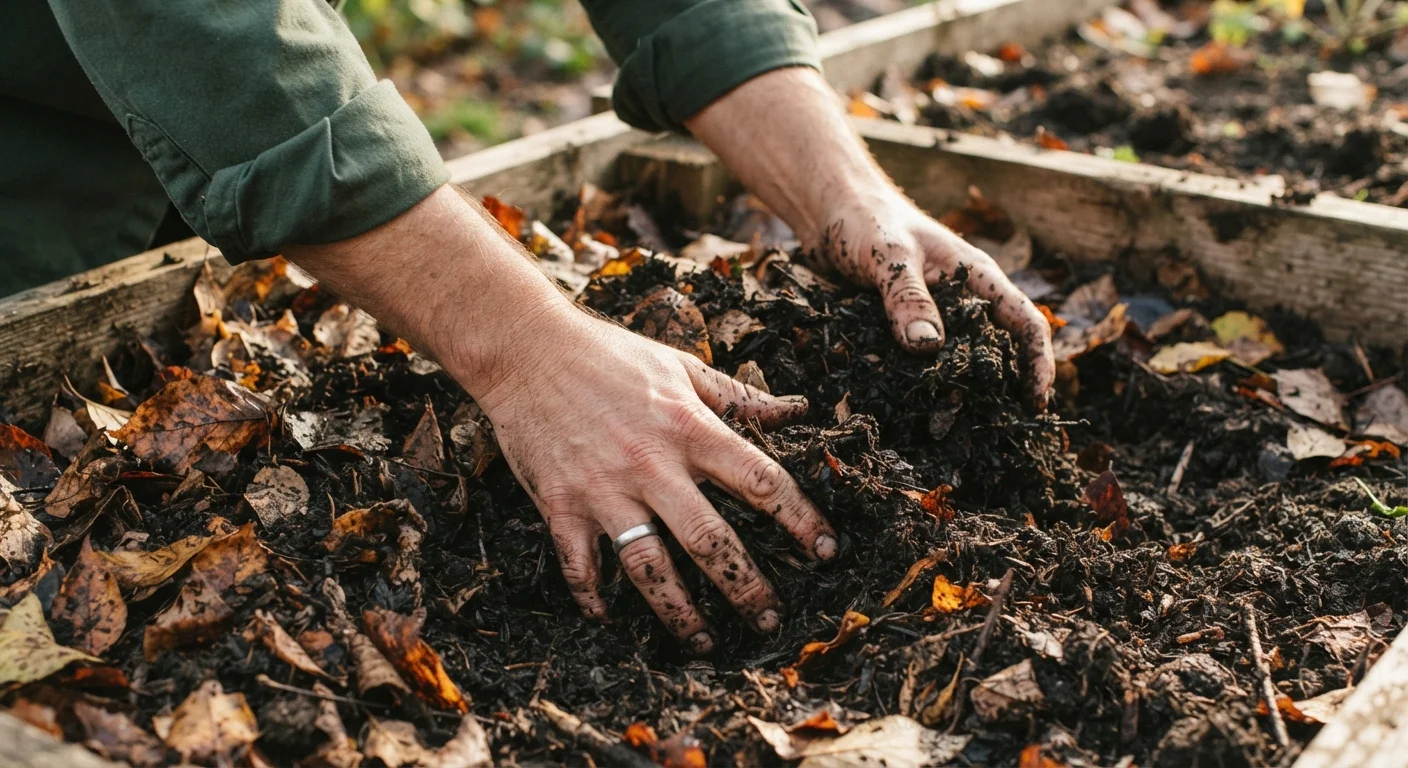
Photo credit: advancesimple.com
In this article
Compost, leaves, and coffee grounds can do more for your garden than pricey fertilizers. Here is what the science actually says.
Key Takeaways
- Compost and organic matter improve soil structure in ways synthetic fertilizers cannot replicate.
- Many free or low-cost amendments feed soil biology, which in turn feeds plants more sustainably.
- Expensive fertilizers deliver nutrients quickly but do nothing to fix poor drainage or compaction.
- Coffee grounds, shredded leaves, and kitchen scraps can substitute for purchased soil products.
- A soil test is the most cost-effective first step before spending anything on amendments or fertilizers.
What fertilizers actually do versus what soil needs
Most bagged fertilizers supply three nutrients: nitrogen, phosphorus, and potassium, listed on labels as N-P-K. Those nutrients matter, but they are not the only thing a garden needs to grow well. Soil is a biological system. It contains fungi, bacteria, earthworms, and organic matter that work together to make nutrients available to plant roots. A fertilizer can add nitrogen to that system, but it cannot rebuild compacted structure, improve water retention, or feed the microbial life that does much of the nutrient work.
Soil amendments, loosely defined, are materials added to change soil's physical or biological properties. Compost is the most common example. Shredded leaves, aged wood chips, and spent coffee grounds also qualify. These materials break down slowly, adding organic matter that loosens clay soils, helps sandy soils hold moisture, and gives soil microbes something to eat. That biological activity is what produces plant-available nutrients over time.
For families starting out, this distinction matters. If your soil is compacted or low in organic matter, adding a liquid fertilizer may produce a brief green response and little else. The starting a vegetable garden on almost no budget addresses this directly: fixing the soil first tends to reduce how much you spend on inputs later.
Common myths about soil and fertilizer
Several persistent beliefs lead gardeners to spend more than they need to. The myth-and-fact pairs below address the ones that come up most often.
Myth
More expensive fertilizer means better results for my plants.
Fact
Price reflects marketing and formulation, not outcome. A free bucket of finished compost often outperforms a costly synthetic product in gardens with poor soil structure.
Fertilizer price is shaped by packaging, brand recognition, and additives. The core nutrients, nitrogen, phosphorus, and potassium, are commodity chemicals. Plants cannot distinguish a nitrogen molecule that cost $0.02 from one that cost $2. What plants do respond to is the overall soil environment: structure, moisture, and microbial activity. Compost improves all three. A bag of granular fertilizer improves none of them.
Myth
Synthetic fertilizers feed plants faster, so they must be better.
Fact
Speed can be a drawback. Fast-release nitrogen can wash out of soil before roots absorb it, wasting money and potentially leaching into nearby water.
Water-soluble fertilizers dissolve quickly and move through soil readily. In a heavy rain or after significant irrigation, a large portion can move past the root zone entirely. Organic matter releases nutrients more slowly through microbial breakdown, which tends to match the pace at which plants can actually absorb them. Slow release is often more efficient, not less.
Myth
If a plant looks healthy after fertilizing, the fertilizer fixed the problem.
Fact
Short-term green growth after a nitrogen application does not mean the underlying soil problem is resolved.
Nitrogen stimulates green leaf growth visibly and quickly. Gardeners often interpret that flush of color as success. However, if soil is compacted, waterlogged, or biologically dead, the plant is still under stress. The fertilizer response fades, the problem remains, and the cycle repeats. Addressing soil structure with organic matter produces a slower but more durable change.
Myth
Coffee grounds make soil acidic, so they are bad for most plants.
Fact
Used coffee grounds are close to pH-neutral. The acidity is largely extracted into the brewed coffee, not retained in the spent grounds.
This myth is widespread, but soil science does not support it. Studies measuring the pH of used coffee grounds have generally found values between 6.5 and 6.8, which is slightly acidic to neutral. That range is appropriate for most vegetables and ornamentals. Grounds do add organic matter and a small amount of nitrogen, making them useful in compost. Applying them in thick layers around plants can create a hydrophobic crust, so mixing them into compost or soil is the more reliable approach.
Myth
You need to buy compost because homemade compost is inconsistent and takes too long.
Fact
Homemade compost made from kitchen scraps and yard waste is free, and basic systems produce usable material within a few months in warm conditions.
Bagged compost from garden centers is convenient, but its quality varies considerably by brand and batch. Homemade compost, while requiring some attention to moisture and carbon-to-nitrogen balance, is free and can be tailored to what you have available. A basic pile or bin in a warm climate can produce finished compost in as little as two to three months if turned regularly. Colder months slow the process; many gardeners simply let a fall pile sit through winter and use it in spring. The composting at home guide covers the basics without requiring special equipment.
Free and low-cost amendments worth knowing
Compost made at home from kitchen and yard scraps costs nothing beyond a little time. If you want a practical starting point, the guide to composting at home walks through a basic system that requires no special equipment.
Shredded autumn leaves are another overlooked resource. Leaves are carbon-rich, and when chopped with a lawn mower and worked into beds, they improve drainage in clay and water retention in sand. Many municipalities offer free leaf pickup or mulch from municipal composting sites.
Coffee grounds add a modest amount of nitrogen and organic matter. They work best mixed into compost rather than applied thickly on their own, since a dense layer can repel water. Local coffee shops will sometimes give away used grounds for free.
Grass clippings left on the lawn after mowing return nitrogen directly to the soil. If you bag clippings, they can go into compost or be used as a light mulch around vegetable plants.
Wood chip mulch applied on top of beds suppresses weeds, holds moisture, and slowly feeds soil fungi as it breaks down. The Chip Drop program, run by a tree-care network, delivers free wood chips from arborists in many US cities. Check availability in your area before counting on it, since delivery depends on local arborist activity.
When a synthetic fertilizer makes sense
Organic amendments break down slowly. If a soil test shows a severe nitrogen deficiency and you need a crop to produce this season, a targeted application of a synthetic fertilizer can address the immediate gap while you build organic matter over time. The two approaches are not mutually exclusive.
Container gardens are a separate case. Potting mix in a container has no connection to native soil biology. Nutrients leach out with each watering. In that situation, a balanced slow-release fertilizer is genuinely useful. The container gardening guide covers this tradeoff honestly.
The practical takeaway: get a soil test first. County cooperative extension offices across the US offer tests for a modest fee, often under $20. Results tell you exactly which nutrients are low, which removes the guesswork and stops you from buying inputs your soil does not need.

Author
Budget Garden & Yard Editorial Team
Budget Garden & Yard Editorial Team is the collective byline for our editorial team and contributor network. Articles published under this byline or an editorial pen name are researched, written, and reviewed according to our editorial standards for clarity, consistency, and independence before publication.
View all articles →