
Grocery Shopping Habits That Quietly Undermine a Healthy Budget
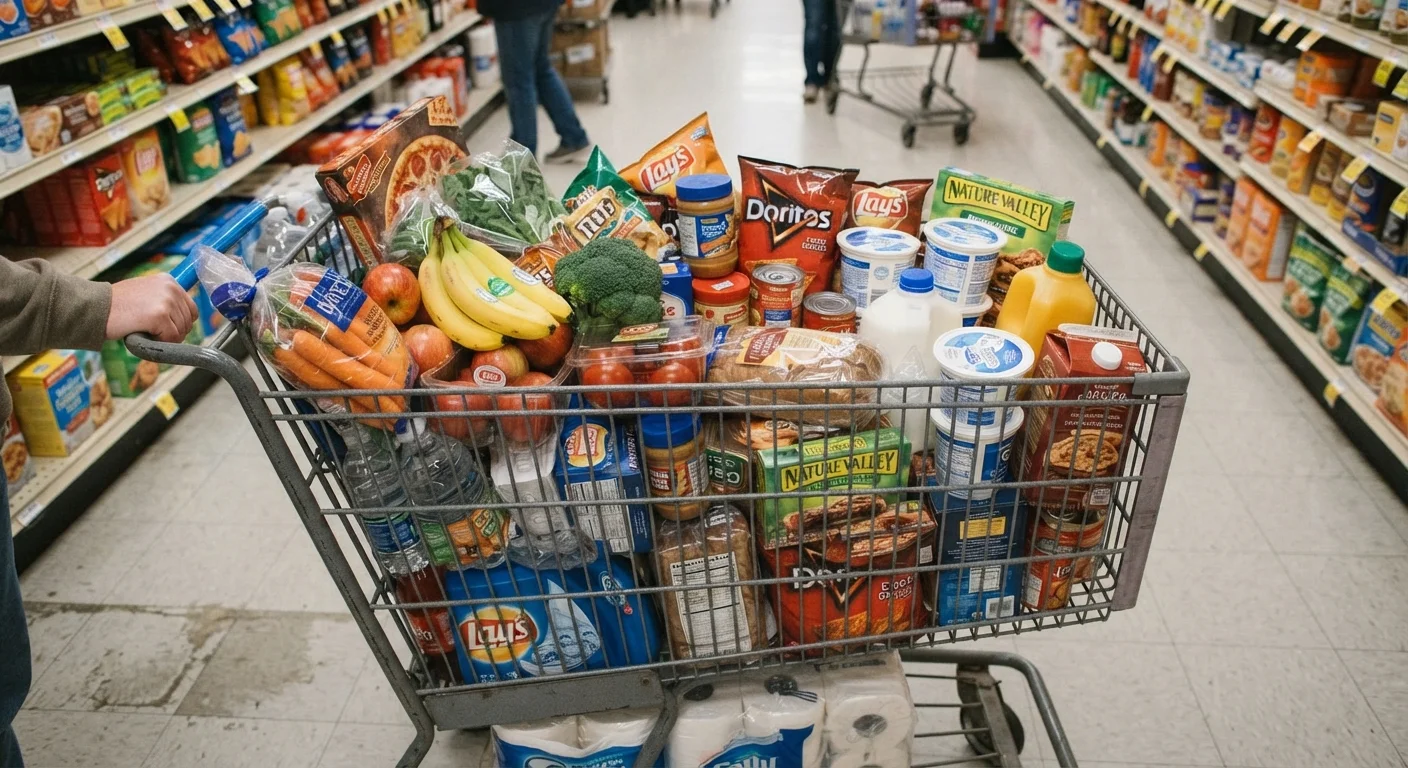
Photo credit: advancesimple.com
In this article
Understand the common patterns that lead families to overspend or under-nourish, and how to course-correct at the store.
Key Takeaways
- Shopping without a list or meal plan consistently leads to overspending and wasted food.
- Hunger and store layout both influence purchases in ways that bypass rational decision-making.
- Choosing convenience packaging over whole foods adds cost without adding nutritional benefit.
- Buying in bulk only saves money when households actually use what they purchase.
- Ignoring unit prices makes it easy to overpay even when trying to be budget-conscious.
Why grocery habits matter more than grocery budgets
Most families who overspend on groceries are not ignoring their budget. They are following habits that feel reasonable in the moment but quietly erode both their finances and their nutrition over time. The problem is rarely one large purchase. It is a pattern of small decisions made quickly, under mild stress, in an environment designed to encourage spending.
Understanding where those patterns come from is the first step toward changing them. The mistakes below are common across households at many income levels. For a broader look at why budgets fail even when families are paying attention, see why families overspend even when they have a budget.
Shopping without a list or a meal plan.
Why it happens: Most people feel they know what their household needs and skip the planning step to save time. Without a plan, though, the store itself becomes the decision-making tool.
Shopping while hungry.
Why it happens: Hunger increases attention to high-calorie, convenient, and packaged foods. Research consistently finds that people buy more, and buy differently, when they shop in a hungry state.
Defaulting to pre-cut, pre-washed, or single-serving convenience formats.
Why it happens: Convenience packaging genuinely saves time, which makes the price premium feel justified. However, the markup on pre-cut vegetables, individual snack packs, and pre-seasoned proteins is substantial.
Buying in bulk without confirming the household will use it.
Why it happens: Large-format packaging signals savings, and the per-unit price often is lower. But perishable bulk purchases that spoil, or pantry items that go stale, produce no savings at all.
Ignoring unit prices and comparing only package prices.
Why it happens: Package size varies widely across the same product category, and total price is the most visible number on the shelf. Without unit price comparison, it is easy to pay more per serving while believing you chose the better deal.
Treating the health halo on a label as proof of nutritional value.
Why it happens: Terms such as 'natural,' 'wholesome,' or 'made with real ingredients' carry no standardized regulatory definition in the US context, but they reliably increase the price and the perceived healthfulness of a product.
Practical corrections that work across most households
Most of these habits are fixable with preparation rather than willpower. A written list tied to a rough weekly meal plan is the single most effective tool for reducing both impulse spending and food waste. It does not need to be elaborate. Even a loose structure covering four or five dinners, with staples filled in around them, changes the shopping trip significantly.
Unit price comparison is a skill worth building. The shelf tag in most US stores shows cost per ounce or per unit alongside the total price. Checking that number before choosing a size or format takes seconds and often reveals that mid-size packages beat bulk, or that store-brand and national-brand prices are nearly identical.
For families trying to reduce costs without reducing nutritional quality, making a grocery budget work without cutting nutrition covers planning and storage strategies in more depth. And pantry staples that support healthy eating without constant restocking provides a reference list of shelf-stable foods that stretch across many meals at predictable cost.
31%
Share of purchased food that US households waste
According to USDA Economic Research Service estimates, roughly 31 percent of the food supply at the retail and consumer level goes uneaten, representing a significant financial loss for families.
~$270
Estimated monthly food waste cost per average household
The Natural Resources Defense Council has estimated that the average American family loses hundreds of dollars annually to food that is bought but never consumed.
Shopping frequency also matters. Multiple short trips per week tend to produce more impulse purchases than one planned trip. Consolidating to fewer, better-prepared trips reduces both spending and the time spent in-store. Low-cost family routines that add up to real savings outlines how repeatable habits around food and shopping compound into meaningful savings over months.
This article is for general informational purposes only and does not constitute financial or nutritional advice. Consult a qualified professional for guidance specific to your household's situation.

Author
Affordable Healthy Living Editorial Team
Affordable Healthy Living Editorial Team is the collective byline for our editorial team and contributor network. Articles published under this byline or an editorial pen name are researched, written, and reviewed according to our editorial standards for clarity, consistency, and independence before publication.
View all articles →