
What Hardiness Zones Actually Mean for Your Garden Planning
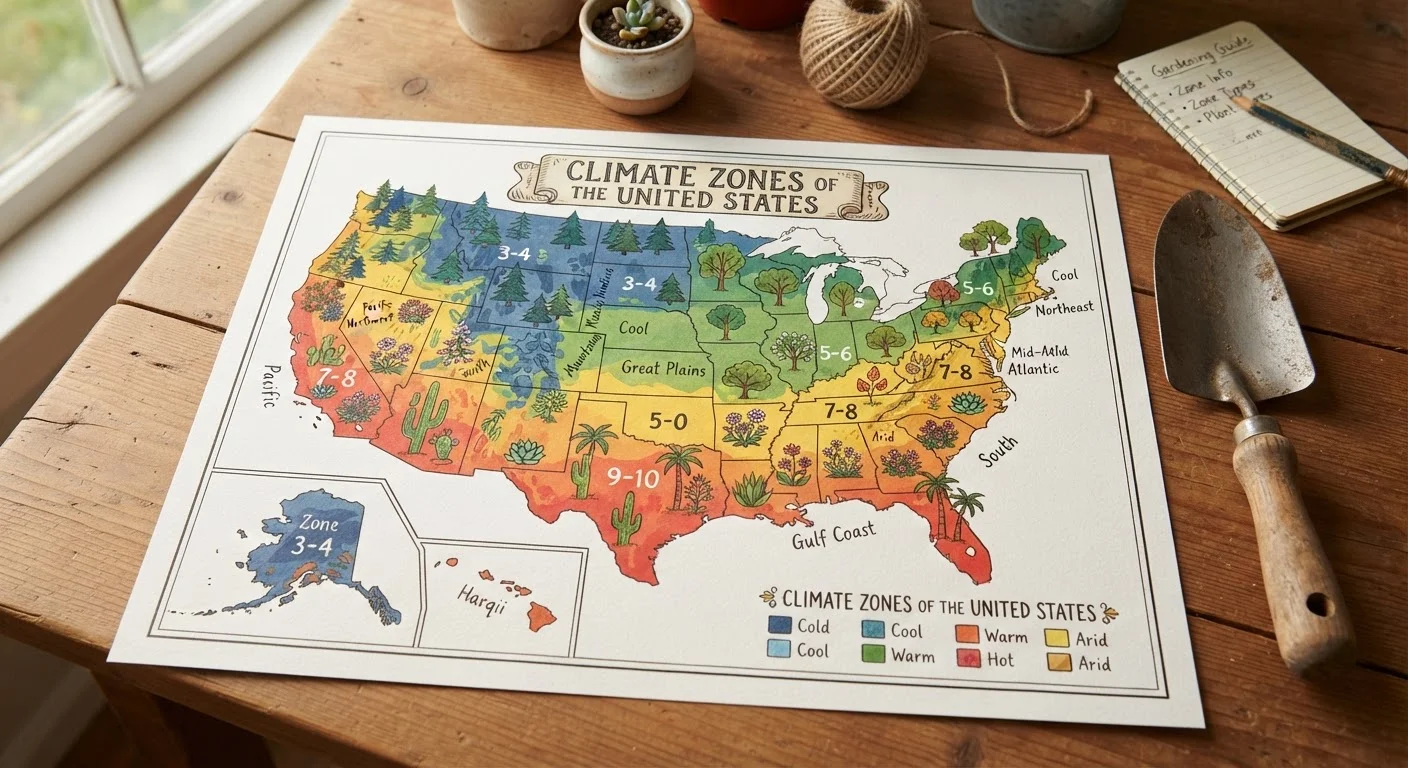
Photo credit: advancesimple.com
In this article
USDA plant hardiness zones explained in plain terms, and how knowing yours helps you choose plants that survive winter without extra cost.
Key Takeaways
- USDA hardiness zones are based on average minimum winter temperatures, not overall climate.
- Buying plants rated for your zone or lower reduces the chance of winter loss.
- Microclimates on your property can shift your effective zone by half a zone or more.
- Zone maps are updated periodically; checking the current USDA map gives the most accurate data.
- Hardiness zones do not account for summer heat, humidity, or rainfall.
What a zone number actually tells you
Every USDA zone number corresponds to a temperature range. Zone 5, for example, covers areas where the coldest night of a typical winter bottoms out between -20 and -10 degrees Fahrenheit. Zone 9 covers areas where the coldest night stays between 20 and 30 degrees Fahrenheit. A plant tag that reads "hardy to Zone 5" means the plant's roots and crown can survive that cold without dying back completely.
What the zone number does not tell you is anything about summer heat, frost dates, rainfall, humidity, or soil type. Two gardens can share the same zone number but feel completely different to grow in. A garden in coastal Washington and one in rural Minnesota might both fall in Zone 7, yet the growing seasons, precipitation, and summer temperatures differ substantially. Hardiness zones answer one narrow question: can this plant stay in the ground through winter?
Hardiness zones vs. frost dates
Frost dates and hardiness zones are related but separate concepts. Frost dates tell you when to plant and when to harvest in a given season. Hardiness zones tell you which plants can survive winter in the ground. Both matter for garden planning, but they answer different questions. Your local cooperative extension office publishes average frost dates specific to your county.
Why this matters for your budget
Planting outside your zone is one of the most common reasons new gardeners lose money. A shrub rated for Zone 8 planted in a Zone 6 yard will likely die the first hard winter, and the cost of replacing it adds up fast. Choosing plants rated at your zone or one zone colder than yours gives them a buffer and reduces the chance of loss.
Perennials are where zone-matching pays off most. A zone-appropriate perennial comes back each spring without you buying a replacement. An out-of-zone perennial becomes an expensive annual. For families watching a garden budget, that difference matters over a few seasons.
13
USDA hardiness zones across the US
The USDA Plant Hardiness Zone Map divides the contiguous US, Alaska, Hawaii, and Puerto Rico into 13 zones based on 30-year average minimum winter temperature data.
10°F
Temperature difference between each zone
Each full zone number represents a 10-degree Fahrenheit band, with 'a' and 'b' subzones each covering 5 degrees within that range.
Half-zone
Typical microclimate shift near a heat-absorbing wall
Gardening extension resources commonly note that south-facing masonry walls can raise the effective minimum temperature enough to push a planting spot into the next warmer half-zone.
Microclimates: when your yard bends the rules
Your official zone is an average across a broad area, but your actual yard has microclimates: small pockets that are warmer or colder than the surrounding region. A south-facing wall absorbs heat and can let you grow plants rated one half-zone warmer. A low-lying spot where cold air settles on still nights can be a half-zone colder than the rest of your yard, killing plants that should technically survive your zone.
Before buying marginally hardy plants, spend one winter paying attention to where frost hits first in your yard, where snow melts earliest, and where the soil stays wetter. Those observations cost nothing and let you place plants where they have the best chance of making it through.
How to use zone information when buying plants
Most nursery plants and seed packets list a hardiness zone range. A label that reads "Zones 4 to 8" means the plant survives winters in those zones. If your zone falls inside that range, the plant is a reasonable choice for overwintering in the ground. If your zone is higher (warmer) than the upper end of the range, the plant may not get the cold dormancy period it needs and can decline over time.
When a label lists only a single zone number, that is usually the coldest zone the plant tolerates, not the warmest. Confirming both ends of the range before buying prevents surprises. Many cooperative extension websites, organized by state, publish lists of plants that perform reliably in local zones, which can simplify shopping considerably.
Zone awareness also helps when buying plants online or from mail-order catalogs, where the seller may be in a different region entirely. A plant thriving in a Georgia greenhouse catalog photo may not be appropriate for a Minnesota yard. Checking the zone label before ordering saves you the cost of a plant that was never going to make it through your winter. If you do lose plants despite good zone-matching, other common causes of early plant death are worth reviewing as well.
Frequently Asked Questions

Author
Budget Garden & Yard Editorial Team
Budget Garden & Yard Editorial Team is the collective byline for our editorial team and contributor network. Articles published under this byline or an editorial pen name are researched, written, and reviewed according to our editorial standards for clarity, consistency, and independence before publication.
View all articles →