
The Real Cost of DIY vs. Hiring a Contractor
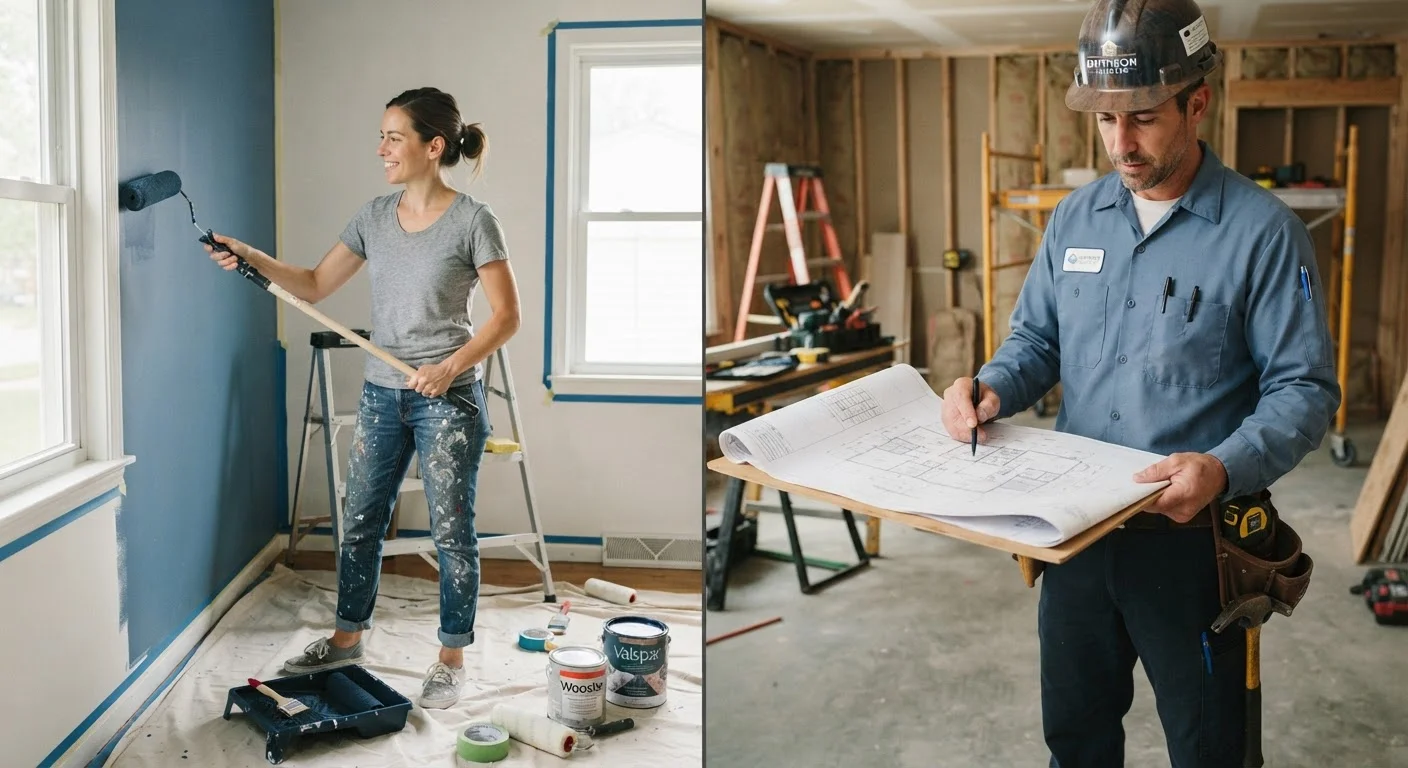
Photo credit: advancesimple.com
In this article
Understand when doing it yourself saves money and when a contractor is the smarter financial choice for common home projects.
Key Takeaways
- DIY saves on labor costs but can cost more if errors require a professional fix later.
- Electrical, structural, gas, and main plumbing work typically requires licensed contractors and permits.
- Your realistic skill level and available time are as important as material costs when choosing an approach.
- Contractor quotes should always be compared and verified before committing to any project.
- Some projects fall in the middle: partial DIY with professional oversight can reduce costs without adding risk.
Where the money actually goes
The appeal of DIY is straightforward: you pay for materials, not labor. Labor typically accounts for 40 to 60 percent of a contractor's invoice on standard residential projects, according to general industry estimates. On a $3,000 bathroom tile job, that gap is real money. But the calculation changes quickly when you factor in tool purchases, wasted materials from errors, and the time cost of learning a skill for the first time.
Contractors bring their own tools, established supplier relationships that sometimes lower material costs, and the experience to avoid the mistakes that inflate a first-timer's budget. They also carry insurance. If a hired pro damages a pipe or causes a structural problem, their liability coverage applies. If you do the same work yourself, the repair bill is yours alone.
For families weighing home renovation financing, see the comparison of home equity loans vs. personal loans before committing to a project budget.
| Criterion | DIY | Hiring a contractor |
|---|---|---|
| Labor cost | None (your time) | 40-60% of total invoice |
| Tool investment | May need to purchase | Included in service |
| Permit responsibility | Homeowner must research and file | Often handled by contractor |
| Insurance coverage for errors | Homeowner bears full cost | Contractor liability applies |
| Speed of completion | Slower with learning curve | Faster with experienced crew |
| Workmanship warranty | None | Typically offered |
| Best project type | Cosmetic, low-risk tasks | Structural, electrical, or regulated work |
Projects where DIY holds up financially
Painting interior walls is the most consistently cited example of worthwhile DIY. Materials run roughly $200 to $500 for an average room depending on paint quality, and the skill ceiling is low. Caulking windows and doors, replacing basic fixtures, patching small drywall holes, and simple landscaping fall into the same category: the margin for error is wide, the materials are forgiving, and tutorials are widely available.
Seasonal maintenance tasks are another area where DIY consistently pays. Cleaning gutters, replacing weather stripping, and swapping HVAC filters are tasks most homeowners can handle safely, and doing them regularly prevents the larger repair bills that come from deferred maintenance. The seasonal home maintenance guide covers a full calendar of these tasks.
The honest limit here is your own skill level and the time you can commit. A weekend project that stretches to three weeks because of a learning curve has a real cost in disruption, even if it saves labor fees.
40-60%
Labor share of typical contractor invoice
General industry estimates for standard residential remodeling projects place labor at roughly half the total project cost.
1 in 5
DIY projects that require professional correction
A survey by HomeAdvisor found approximately one in five DIY attempts ends up requiring a professional to fix or complete the work.
$1,200+
Average cost to fix a botched DIY plumbing job
Angi's cost data for emergency plumbing repairs, including water damage remediation from DIY errors, commonly exceeds $1,200.
When hiring a contractor is the financially sound choice
Electrical panel upgrades, new circuit installation, gas line work, structural modifications, roofing replacement, and plumbing connected to the main supply all require licensed professionals in most U.S. jurisdictions. Attempting these without a permit or proper credentials can void your homeowner's insurance, create problems at resale, and in some cases create genuine safety hazards for your household.
Beyond legal requirements, complexity matters. A contractor who installs 50 tile showers a year will complete the work faster and with fewer material errors than a homeowner doing it once. The cost of one botched waterproofing job, which can lead to mold and structural moisture damage, typically exceeds what the labor savings would have been.
Getting multiple quotes is standard practice and worth the time. Ask each contractor what the quote includes, whether permits are their responsibility, and what warranty they provide on labor. That last point matters: a professional guarantee on workmanship is something DIY cannot offer.
For a broader look at assumptions that cost homeowners more than they save, the common budget renovation myths article covers frequent miscalculations worth reviewing before starting any project.
The middle ground: partial DIY
Some projects split naturally into a licensed phase and a labor-intensive-but-safe phase. A kitchen renovation might require a licensed electrician for new outlet placement, but the demolition of old cabinetry, priming walls, and installing hardware are tasks a capable homeowner can handle. Handling those portions yourself reduces the total invoice without touching the work that carries legal or safety requirements.
Discuss this split openly with any contractor you hire. Some welcome it because it keeps their crew focused on skilled work. Others price their bids assuming full scope, so clarifying roles upfront avoids billing disputes later.
Tracking these decisions as part of your broader household budget is useful. If you want a framework for reviewing where renovation spending fits into your overall finances, the household spending audit is a practical starting point.
This article is for general informational purposes only. For projects involving electrical, structural, gas, or plumbing work, verify local permit requirements and consult a licensed professional before beginning.

Author
Home on a Budget Editorial Team
Home on a Budget Editorial Team is the collective byline for our editorial team and contributor network. Articles published under this byline or an editorial pen name are researched, written, and reviewed according to our editorial standards for clarity, consistency, and independence before publication.
View all articles →